
How Flight Time Logging and Billing Works in Japan
One of the first things you'll notice when renting aircraft in Japan is that the billing system works differently from what pilots in the United States are used to. And once you understand how it works, you might actually appreciate it, especially when you're in the middle of building hours and every minute counts.
The Basics — Block Time vs. Flight Time
These are universal terms that every pilot should know, but how they're applied when it comes to billing is where things differ between countries.
Block time is the total time from the moment you leave your ramp to the moment you arrive at your destination ramp. This covers everything; taxiing, holding short, waiting for clearance, and rolling back to the ramp after landing.
Flight time is the time from you take-off to when you land; purely the time you were airborne.
Let's take a look at a real Japanese aircraft logbook to further understand this.
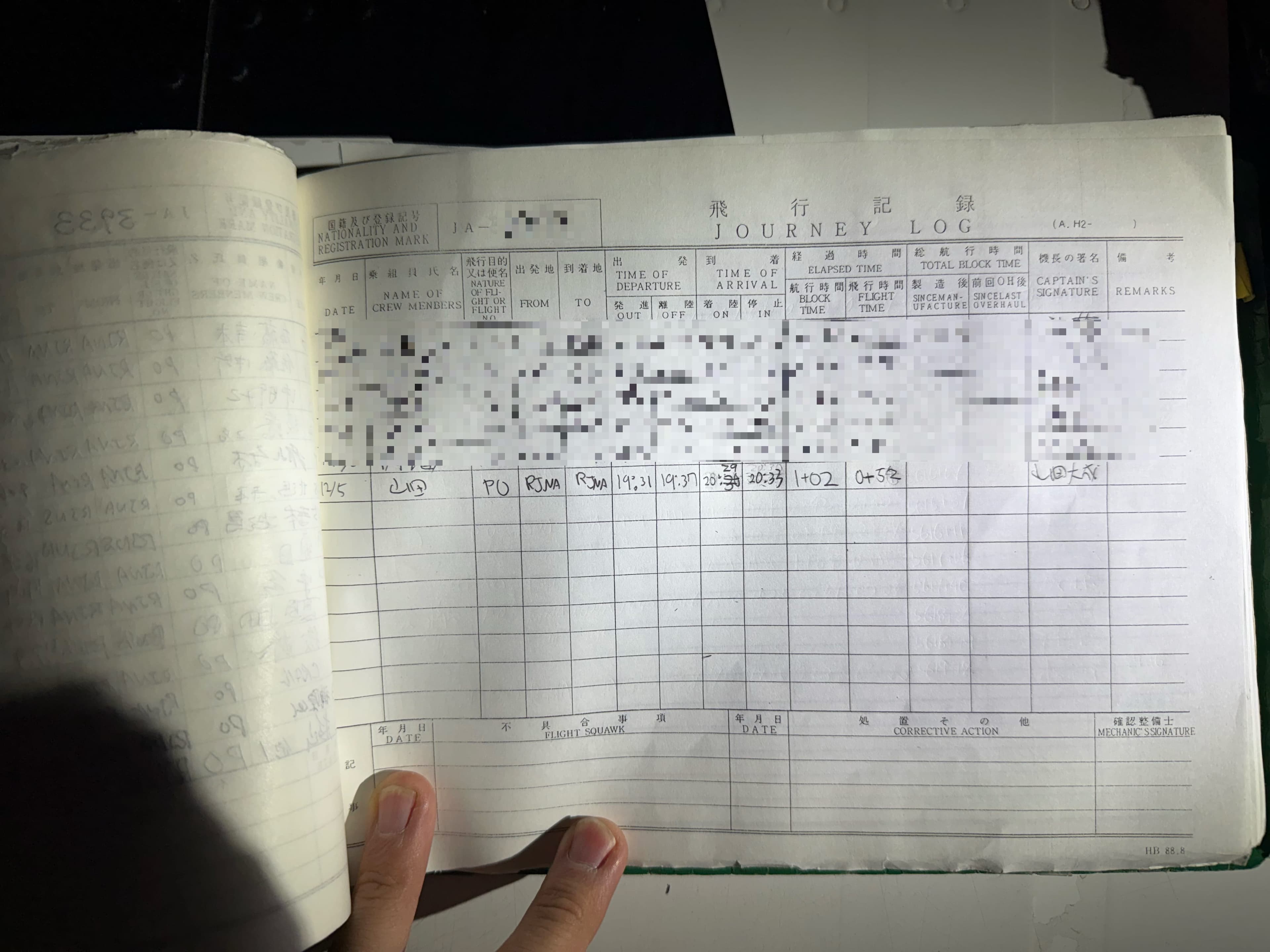
On this particular flight, the pilot pushed back from the ramp at 19:31, took off at 19:37, landed at 20:29, and was fully stopped back at the ramp by 20:33.
The logbook records two separate time columns side by side: block time and flight time. The block time comes out to 1 hour 2 minutes, covering everything from the moment the aircraft left the ramp to when it stopped. The flight time, however, is only 52 minutes, covering just the airborne portion from take-off to landing.
That 10-minute difference is what the pilot was not billed for. And right there in the logbook, both figures are recorded, as per the pilot's logbook below.
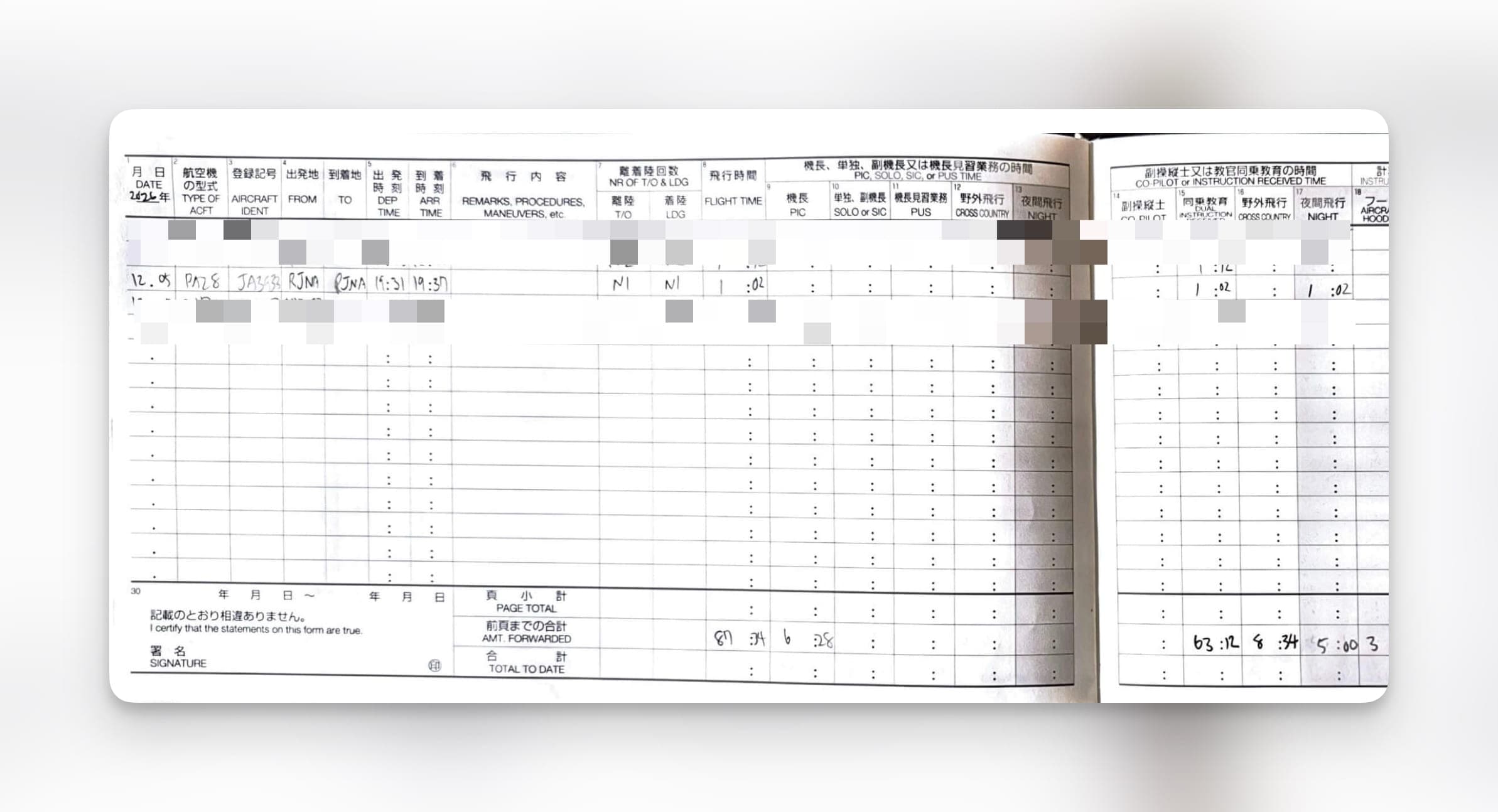
As you can see, we can log the total block time — the entire 1 hour 2 minutes, as the flight time, but we only had to pay for 52 minutes of flight time, which is pretty awesome!
Contrast that to the States where you use Hobbs time for both logging and billing, and we think this is pretty sweet.
What do you think?
Happy billing 💸